TU 17/23 Dental Explorer: A Practical Buying Guide

The explorer is one of the oldest and most frequently used instruments on any exam tray. Among the many patterns available, the TU 17/23 is a double-ended design that remains a staple in general dentistry and hygiene operatories because it combines two distinct diagnostic functions into a single handle.
What Is a TU 17/23 Explorer?
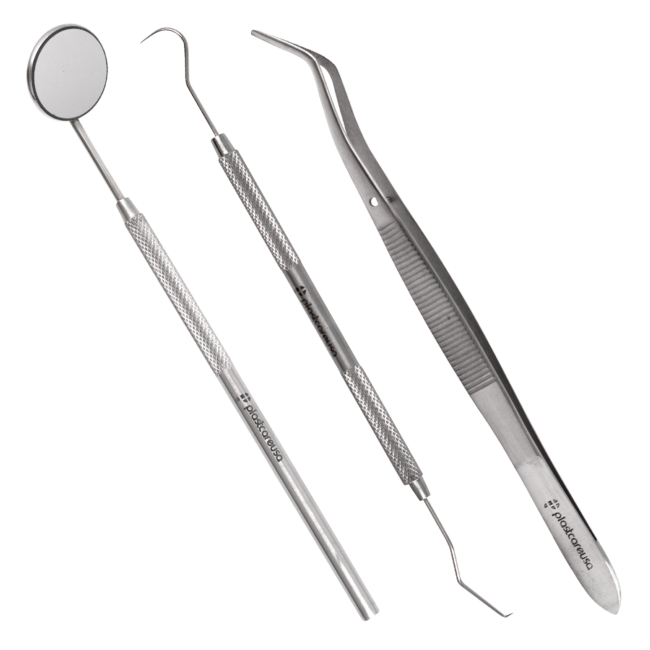
The TU 17/23 dental explorer combines a TU17 end for subgingival calculus detection with a #23 Shepherd’s Hook end for caries detection. Because double-ended instruments combine two functional tips on a single handle, this design improves workflow efficiency and reduces the need to switch tools during diagnostic evaluation. The #23 end’s rounded hook shape allows clinicians to trace pits, fissures, and smooth surfaces, while the TU17 end is shaped for tactile assessment along the gumline.
How Dental Teams Use It
Explorers provide tactile feedback rather than visual information, which is why they remain useful even with the rise of digital imaging and intraoral cameras. Dentists and hygienists run the tip lightly across tooth surfaces and restoration margins to feel for catches, soft spots, ledges, or rough areas that may indicate decay, defective margins, or calculus deposits. The TU17 end is particularly suited to sweeping along the sulcus to detect subgingival calculus that isn’t visible on direct examination.
It’s worth noting that explorer use for caries detection has drawn some clinical debate in recent years. Dental lesions initially develop a subsurface lesion, and using a dental explorer with firm pressure to probe suspicious areas may result in rupture of the surface layer covering early lesions. Many practices now reserve firm exploratory strokes for restoration margins and calculus detection, relying on visual exam, radiographs, or caries-detection aids for early incipient lesions, rather than heavy tactile pressure on intact enamel.
Choosing the Right Explorer
Not all TU 17/23 explorers are built the same, and small differences in construction affect both durability and feel chairside.
- Tip metal: Look for high-grade stainless steel construction, which resists corrosion and holds a consistent tactile edge through repeated sterilization cycles.
- Flexibility: Some explorers are handcrafted from flexible, durable steel alloys designed to add resilience for increased precision during diagnosis. A slightly flexible tip can reduce the risk of tip breakage when navigating tight interproximal spaces.
- Handle weight: Explorers are available with lightweight or larger-diameter handles. A heavier handle can reduce hand fatigue during long hygiene days, while a lighter handle may suit clinicians who prefer a more delicate, pen-like grip.
- Single vs. bulk packaging: For practices, schools, or DSOs stocking multiple operatories, ordering explorers in bulk with consistent tip geometry helps standardize technique across providers and reduces variability in calculus and caries detection from room to room.
Common Mistakes to Avoid
A few avoidable errors shorten the useful life of an explorer or compromise diagnostic accuracy:
- Using the wrong end for the task. The TU17 end is designed for tactile detection of subgingival calculus, while the #23 Shepherd’s Hook end supports caries detection and examination of pits and fissures — mixing up the two reduces sensitivity and can mask findings.
- Applying excessive pressure. Heavy force increases the risk of damaging early, remineralizable lesions and can also bend or dull the fine tip prematurely.
- Skipping routine sharpness checks. A dulled or bent tip loses tactile sensitivity, making subtle calculus ledges or margin defects harder to detect.
- Improper sterilization cycling. Repeated autoclaving without proper drying or lubrication can accelerate corrosion at the tip, shortening the instrument’s usable lifespan.
A well-chosen TU 17/23 explorer, used with the correct end for the correct task and paired with appropriate pressure, remains a dependable, low-cost diagnostic tool for general exams, hygiene recare visits, and restorative margin checks alike.
Related PlastCare USA Products
Where to Buy PlastCare USA Products
Dental practices: order PlastCare USA products through our authorized distributors — MyDDS Supply, Dental City, or the PlastCare USA Amazon store.
Distributors, DSOs and bulk buyers: for wholesale and private label pricing, request a quote or call 866-993-9993.